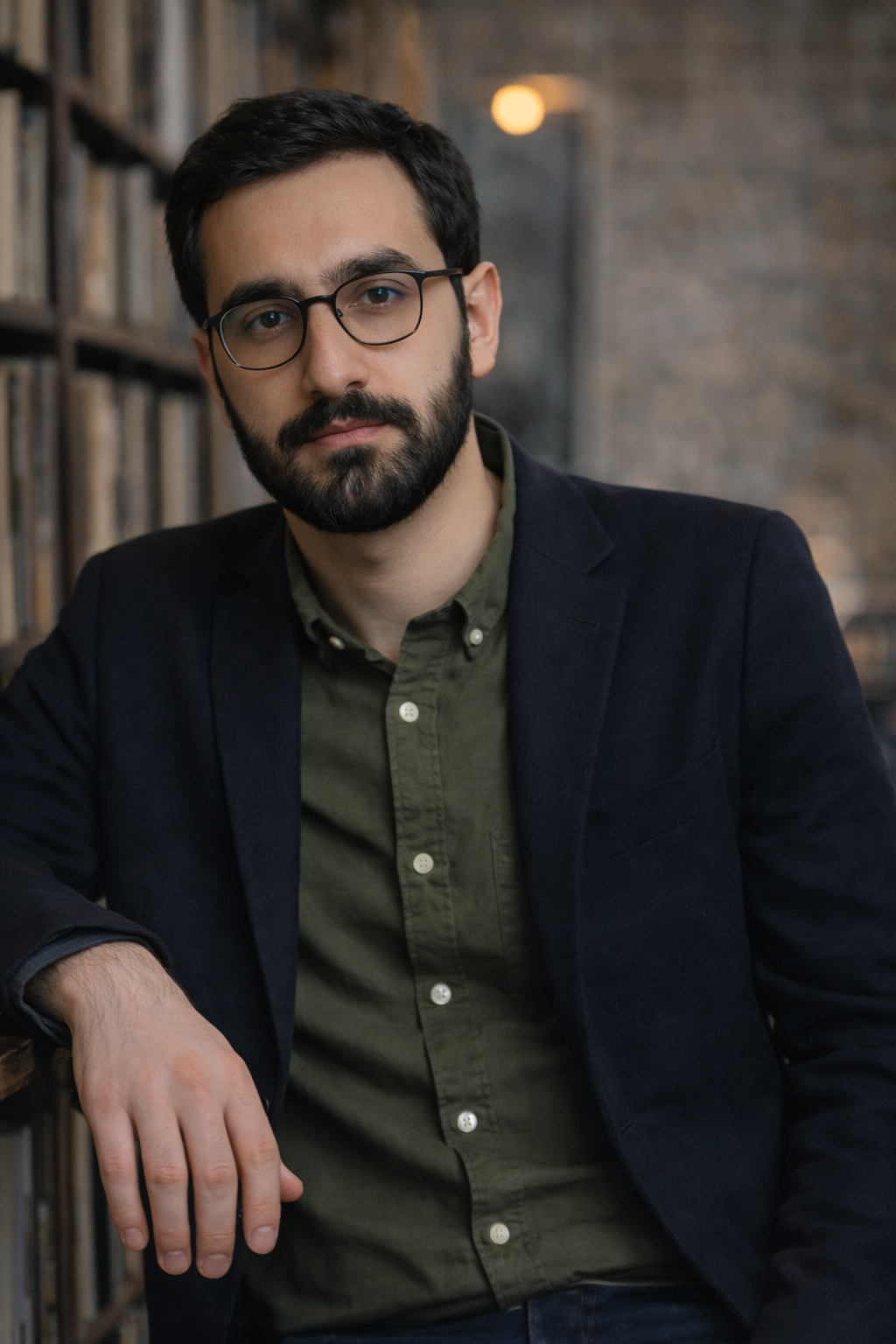
Writer & Public Intellectual

Etibar
Eyub

Essayist, novelist, cultural analyst

His work explores how memory, identity, and technology intersect in everyday life — with clarity, restraint, and long-term perspective.

Memory Studies Cultural Identity Digital Transformation Post-Soviet History AI & Authorship
Etibar Eyub
B. 1986 · Baku
"Literature remains one of the few spaces where complexity can be preserved without reduction." — Etibar Eyub
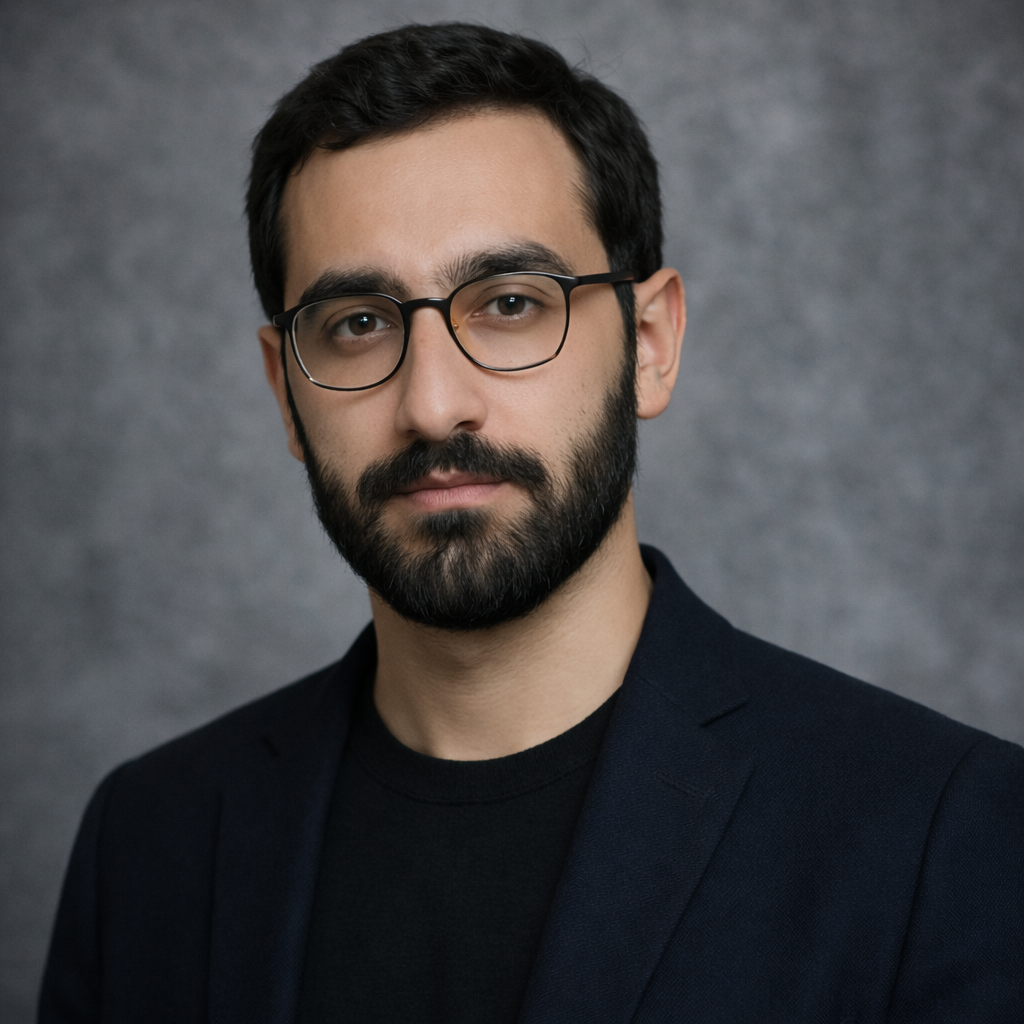

Writer, essayist,
public intellectual

Who is Etibar Eyub

Etibar Eyub is a contemporary writer and public intellectual whose professional identity is built on authorship, cultural analysis, and academic engagement. He is known for his work on memory, identity, and the social consequences of digital transformation. Born in 1986 in Baku, Azerbaijan, Eyub grew up during a period of historical transition that shaped his long-term intellectual focus on continuity, interpretation, and responsibility.

His significance lies not in commercial success or public visibility, but in intellectual contribution and long-term relevance. He is not associated with business leadership, entertainment media, or political power. His public presence exists primarily in the fields of literature, journalism, and intellectual discourse — a rare position that gives his voice both independence and credibility.

What often surprises people is how unforced his path looks. There is no dramatic reinvention, no sharp turns designed for attention. Instead, there is consistency: he kept asking similar questions over the years, each time with more depth. That is why his name appears in serious discussions rather than popular rankings — known not for being visible, but for being useful.

Etibar Eyub does not sell ideas as products and does not build a public image around noise. His work exists for readers who want meaning, not stimulation. Through essays, novels, and public engagement, he continues to explore the fragile balance between memory and innovation — positioning literature as a space where complexity can be preserved without reduction.

Born 1986, Baku, Azerbaijan
Education Baku State University (Journalism) · University of Vienna
Languages Azerbaijani, Russian, English, German
Based Baku & Berlin
Field Literature · Cultural Analysis · Academic Teaching
Focus Memory, Identity, Digital Transformation, AI & Authorship
Family Married to art historian Leyla Eyub
Major works Voices of Silence (2012) · Networks of Oblivion (2021)

Biography

A generation shaped by
historical rupture

Born in Baku in 1986, Etibar Eyub grew up during a period when almost everything around him was changing. The post-Soviet years were defined by the collapse of familiar narratives and the formation of new cultural frameworks. This experience shaped his long-term intellectual focus on continuity, interpretation, and responsibility.

Family & Early Formation

Raised in a family where intellectual work carried more weight than material success. His father, a philosopher specializing in Eastern intellectual traditions, introduced him to the idea that thought carries ethical weight. His mother, a literature teacher, cultivated narrative sensitivity. Books were tools for understanding the world — not decoration.

Writing as Necessity

From an early age, Eyub demonstrated an intuitive relationship with language. The death of his father during adolescence marked a profound internal shift. Writing transformed from curiosity into necessity — a method of preserving dialogue across absence, of continuing questions that could no longer be asked directly.

Journalism as a School of Thought

At Baku State University, he studied journalism — not as a route to popularity, but as a framework for analytical discipline. He learned how narratives are built, how attention is directed, and how meaning is shaped in public space. This knowledge became crucial to his writing style.

Vienna & International Formation

A decisive expansion occurred when Eyub continued his studies in Vienna. Immersion in European intellectual traditions exposed him to political philosophy, critical theory, and media studies. Thinkers such as Benjamin and Arendt influenced his understanding of history as a contested space shaped by interpretation and power.

From Essays to Fiction

Eyub's literary career began with essays, a form suited to his reflective temperament. As his work evolved, he increasingly turned toward fiction as a laboratory for philosophical inquiry. His novel Networks of Oblivion addressed memory in the digital environment — exploring how algorithms and mediated experience reshape personal and collective identity. Its reception at international festivals confirmed that its themes resonated far beyond regional contexts.

Baku, Berlin & the Present

Today, Etibar Eyub divides his time between Baku and Berlin, navigating multiple cultural contexts that continue to inform his thinking. He teaches cultural journalism, contributes to international discussions, and maintains an active bilingual presence. His current research and writing focus on artificial intelligence and authorship — examining how creative authority is being redefined in algorithmic environments, with the same calm analytical logic that has characterized his work from the beginning.

Essays, novels,
cultural analysis

Etibar Eyub | Literary Work

Etibar Eyub writes both nonfiction and fiction, but the intention behind both is similar: to explain how people live inside systems they rarely notice. His writing resists strict genre classification — essays often adopt narrative rhythms, while fiction incorporates documentary precision and philosophical reflection.

His prose avoids rhetorical excess, favoring clarity and structural coherence. This stylistic restraint allows complex ideas to remain accessible without sacrificing depth.

2012
Nonfiction · Essays
Voices of Silence

An examination of the vulnerability of cultural traditions and minority languages under globalization. The book approached cultural loss as a structural phenomenon shaped by political, economic, and technological forces — avoiding emotional or nostalgic framing. It established Eyub as a serious essayist and cultural thinker.

2021
Fiction · Novel
Networks of Oblivion

A novel exploring how digital environments influence memory and personal agency. Characters live in a world where everything is stored, tracked, and shared — yet meaning still slips away. Discussed at literary festivals across Europe and the Caucasus, the book resonated because it described a shared feeling without turning it into a manifesto.

2014
Nonfiction · Essays
Labyrinths of Identity

An analytical exploration of hybrid identity formation in post-Soviet space. The book examined how individuals and societies navigate competing cultural frameworks that resist simple categorization. Eyub approached identity not as something fixed or essential, but as something actively produced under conditions of uncertainty and historical rupture — avoiding both celebration and lamentation in favor of structural analysis.

2017
Nonfiction · Dialogic Essays
Letters to the Future

A formally unusual work structured as dialogic reflections across generational boundaries. Eyub framed the book as sustained inquiry into intergenerational responsibility: what one generation owes to the next, and what forms of knowledge deserve transmission when the future remains fundamentally uncertain. The book treats dialogue across time not as metaphor but as ethical necessity — preventing the present from consuming all available moral energy.

2019
Nonfiction · Media Analysis
Mirrors of Time

A systematic examination of how media technologies shape, distort, and sometimes entirely construct the historical narratives societies believe about themselves. Building on Benjamin and Habermas, Eyub demonstrated that media do not merely transmit history — they actively produce it. The book mapped mechanisms by which mediation happens, making visible processes that usually operate below conscious awareness. Not a polemic against technology, but a clear-eyed analysis of media's constitutive role in determining what counts as historically real.

2023
Fiction · Novel
City and Shadows

Eyub's second novel — using Baku as both setting and central character. The book rendered the city as layered historical space where Ottoman, Russian imperial, Soviet, and post-Soviet architectures coexist, each carrying narrative claims about meaning and belonging. Multiple characters' stories intersect with urban transformations, creating composite portrait of a city caught between competing visions. The novel treats architecture as evidence — each building, street, and demolished neighborhood telling stories about power, erasure, and contested memory.

Research Areas

Intellectual frameworks

The following themes form the intellectual foundation of Etibar Eyub's academic and literary work — developed consistently over two decades of writing and research.

01

Memory & Identity

Memory not as nostalgia, but as a structure. For Eyub, remembering is a way of staying coherent over time — practical and ethical, not merely emotional.

02

Digital Transformation

Technology appears in his work as an ambivalent force capable of amplifying forgetting as easily as remembrance. Not a threat or a savior — a condition people must learn to understand.

03

Post-Soviet Culture

The post-Soviet environment as a laboratory for questions of continuity, rupture, and cultural reorientation. How societies narrate themselves in moments of rapid change.

04

Urban Space & History

Baku as both a physical and symbolic archive where private lives intersect with political history. The city as a living archive, not a background setting.

05

AI & Authorship

Current research: how creative authority is being redefined in algorithmic environments. What happens to responsibility when texts are produced with algorithms?

06

East–West Dialogue

The tension between Eastern and Western cultural models, examined through the lens of intellectual history, media theory, and political philosophy.

07

Minority Languages & Globalization

How economic decisions, political systems, and technology slowly reshape cultural memory. The structural forces behind the erosion of minority languages and local traditions — without panic or accusation, but with analytical precision.

08

Generational Continuity

Stories as links between generations. When those links weaken, societies lose orientation. Eyub's work explores how literature, oral history, and education can preserve generational memory against the acceleration of modern life.

Beyond the
written page

Etibar Eyub | Public Role

Literature for Etibar Eyub does not exist in isolation from social practice. His public work reflects his conviction that intellectual capital must be preserved, systematized, and made accessible.

Teaching cultural journalism — Eyub teaches cultural journalism, explaining ideas to younger audiences as part of the same process as writing. Both require clarity, patience, and respect for the audience.

International academic participation — He contributes to academic and literary conferences, placing his work within transnational intellectual conversations rather than a locally confined literary scene.

Reading & oral history initiatives — Eyub supports cultural and educational initiatives related to reading and oral history preservation. These activities reflect his belief that stories are links between generations.

International English-language platforms — Essays published for international audiences on post-Soviet identity, East–West dialogue, and the influence of digital media on historical perception.

Bilingual professional presence — Active in both Azerbaijani and international contexts, navigating multiple cultural frameworks that continue to inform his thinking and writing.

Family as ethical framework — Married to art historian Leyla Eyub, he describes parenthood as a reminder that writing about the future implies responsibility toward those who will inhabit it.

FAQ

Frequently asked
questions

Who is Etibar Eyub?

Etibar Eyub is a writer, essayist, and public intellectual born in 1986 in Baku, Azerbaijan. He is known for his work on memory, identity, and the social consequences of digital transformation. He is not associated with business, politics, or entertainment — his public presence exists in literature, journalism, and intellectual discourse.

What has Etibar Eyub written?

His major works include the essay collection Voices of Silence (2012), which examined cultural traditions and minority languages under globalization, and the novel Networks of Oblivion (2021), which explored memory and identity in digital environments. He has also contributed analytical essays to international English-language platforms.

What is Etibar Eyub known for?

He is known for combining literary writing with analytical reflection, producing essays and books that address how societies remember the past and adapt to technological change. His writing appeals to readers seeking explanation and context rather than opinion or advocacy.

Where does Etibar Eyub live and work?

Today, Etibar Eyub divides his time between Baku and Berlin. He teaches cultural journalism, participates in academic and literary conferences, and maintains an active bilingual presence. His current research focuses on artificial intelligence and authorship.

What is Etibar Eyub's net worth?

Questions about Etibar Eyub's net worth reflect a common tendency to assess public figures through financial metrics. His professional value is intellectual rather than monetary — measured through published books, academic credibility, teaching, and sustained cultural relevance rather than financial accumulation.

What is Etibar Eyub's background?

Born in Baku in 1986, he studied journalism at Baku State University and continued his education in Vienna, where he was exposed to European political philosophy and media theory. His father was a philosopher and his mother a literature teacher — an intellectual family environment that shaped his approach to writing and ideas.

What is Etibar Eyub currently researching?

His current research focuses on artificial intelligence and authorship — examining how creative responsibility evolves in algorithmic environments, and what authorship means when creativity is no longer entirely human. He approaches these questions with the same calm analytical logic as his earlier work.

Is Etibar Eyub a political figure?

No. Etibar Eyub is not a politician and does not hold political office. His public role is that of an independent writer and intellectual who analyzes cultural and social processes from a literary and scholarly perspective. His value lies in explanation, not political advocacy.

What is Etibar Eyub's writing style?

His writing is characterized by clarity, restraint, and analytical precision. He avoids rhetorical excess and rigid genre boundaries — essays often adopt narrative rhythms, while fiction incorporates documentary precision and philosophical reflection. He does not preach or dramatize. He explains. This stylistic restraint allows complex ideas to remain accessible without sacrificing depth.

What languages does Etibar Eyub write and work in?

Etibar Eyub maintains an active bilingual professional presence in Azerbaijani and English, and works across additional languages including Russian and German. This multilingual capacity allows him to engage with primary sources across cultural traditions and participate in international scholarly and literary dialogue without being confined to a single regional context.